Netting and Potting Bait
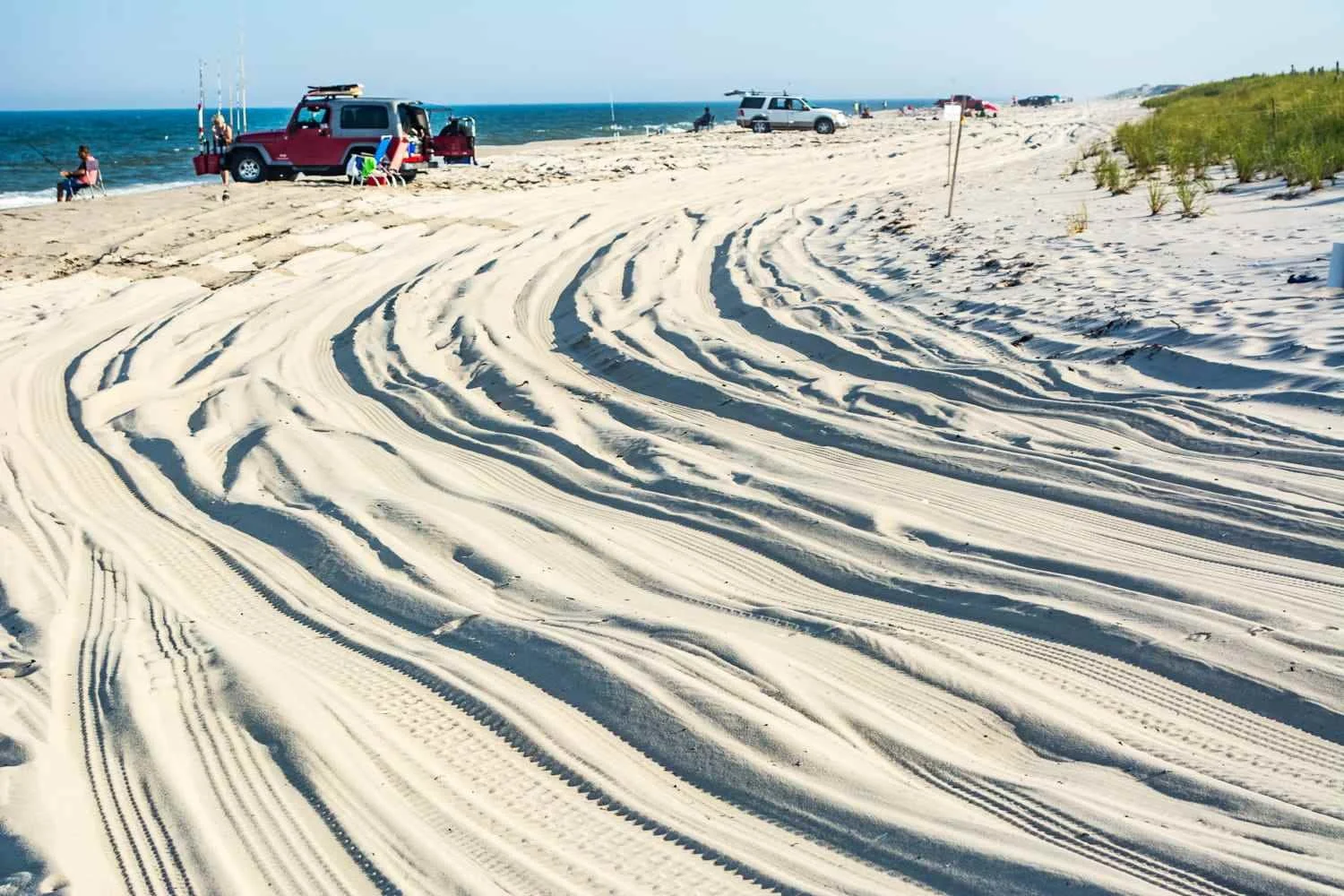
Before arriving on Island Beach State Park to fish for fluke, I used to buy killies at Murphy’s Hook House before crossing Barnegat Bay, fish that must have been potted. Commercially, of course. It’s more efficient than netting. My leftovers? I took them home to use in freshwater, catching river smallmouths. Yes, the Atlantic killiefish calls the salt its own but survives in freshwater. I’ve become a convert since then. I don’t buy the killies anymore. I like using Berkley Gulp! on an anchor jig, and Elaztech for a teaser. (They often hit the teaser. And some will hit a hair teaser.) Will they better than killies? A little secret between us: the jury is forever out on that.
Fluke will always hit killies, and Fred might have used one of mine to catch this one. I do know we fished the South Jetty at Barnegat Light. He’s got a mole crab rake, and we use those for the tog.
Salt and Fresh
Three methods of getting bait—drop or umbrella netting, drag or seine netting, and potting—prove effective in many stream situations. Other methods exist, such as throw-netting from a boat on inshore waters to collect peanut bunker. And besides, the use of a Sabiki rig on light spinning tackle is effective for collecting herring. You can also buy a rake with a basket behind the tines like a clam rake—but for collecting sand fleas in the surf. Sand fleas or mole crabs serve as bait for tog, sheepshead, and triggerfish. And Sabiki rigs, popular on ocean piers, will possibly work on lakes like Hopatcong, too. Something will have to, because Lauri Murphy and Joe Welsh at Dow’s Boat Rentals are retiring. Salt and freshwater—both are open to DYI.
Before I say more, I want to credit the New Jersey State Federation of Sportsmen’s Clubs. Those of you who frequently read my posts know that I’m published in New Jersey Federated Sportsmen’s News regularly, which means a lot of articles for my website. I appear even more often in The Fisherman, sometimes certainly have, but publishing the articles that already get published on the web would be self-defeating. I know, you hit the paywall with most, but Google has enforced rules about duplicate content, so I rest content with The Fishermen’s putting them out there. The Fed does not publish the ones I submit to them on the web.
Potted killies from a salt creek in North Carolina.
About netting and potting, altogether, the number of gamefish species that may take whatever bait you collect is beyond the scope of my presentation, but I’ll name a few. Likewise, the species of fish forage that may be collected in the first place are too many to name—but I’ll mention some.
Chubs
I haven’t used a drop net—also known as an umbrella net—in 20 years, but I remember how effective the use can be wherever creeks or small streams have healthy populations of minnows and chubs. Chubs are great bait not only for smallmouth and largemouth bass, pickerel and pike; they can make the difference when walleye, pickerel, largemouth and trout fishing. Decades ago. I got a six- or seven-inch chub when drop netting a Mercer County creek, and I saved it for last while fishing December walleyes on the Delaware River, letting my brother Rick lob it out into 10- or 12-foot depths.
We steadily caught small walleyes 16 inches long on jigs tipped with minnows, all the minnows netted on the same occasion. I knew Rick felt a strong pickup because he guffawed while lunging forward and opening the bail.
Then he set the hook, rod doubled over, and let the fish run upstream against the drag. It never stopped before the hook pulled free.
It’s not the only story of a chub making the difference. In the lower pond of a series of six in Princeton, I once caught a 23-inch pickerel on another drop-netted chub of six or seven inches, and on a different occasion at the second pond of the same series, someone came with a live chub, catching a five-pound largemouth.
The trout, as I assume it was, at Round Valley Reservoir, didn’t take a netted chub, but I got an usually large baitfish among those I bought, and I don’t say “shiner” because the memory impression (probably fallacious) I have of it 10 years later is of a chub. Someone came pounding on my windshield. “Dude! Your rod is bending like crazy!”
Yeah. Lucky I didn’t lose my rod. And—of course—by the time I ran over there, the fish had got off.
So much for paying attention. I was reading a book. Go figure.
Here my son Matt uses one of my two pots in a salt creek, emptying by hand one half of it. I’ve use a pot for minnows in freshwater, but I do find, however, that an umbrella net works better there.
My son, Matt, threw a pot across the creek and upstream, placing it a couple of feet from the bank. We leave pots out for hours, letting them collect the bait.
Minnows
Chubs make a difference, but various minnow species, even though you might not find Arkansas shiners here in New Jersey, catch plenty of gamefish. So do dace and even little sunfish. A drop net gets tossed into a hole where the water is clear enough for baitfish to see finger-rolled pieces of bread tossed over the net. The baitfish go into a feeding frenzy visible over that net. Quickly raise it by snapping the wrist and pulling the cord tied onto it at the center. Two metal pieces, crossed at the center, bow downward umbrella style to four corners. The net itself is about three-and-a-half feet square. Usually, you can drop the net several times before baitfish quit congregating over it.
Another method is drag-netting, which involves the use of a seine net with weights along the bottom edge, floats along the top, usually about eight to 10 feet wide with a vertical depth of four feet. Two people pull it against the current, usually through about three feet of water. The top and bottom of the net—each side—has a pull cord. On one side, you put the bottom cord under the left foot and lead with the right foot, dragging the net behind a crouching stance while pulling the bottom cord with the right hand and pulling the upper cord with the left. Your partner does the opposite on the other side. Again, minnows, chubs, dace get caught. On rare occasion, small eels do, though the minimum legal size is nine inches in New Jersey. We used to get banded killifish from a larger Mercer County stream—very effective for smallmouths.
Naturally, regarding any method of bait collection, you don’t want to overdo it. The daily legal limit on freshwater baitfish in New Jersey is 35. That includes the alewives of Lake Hopatcong, which clearly seem to me to be a rising concern. (If you look hard enough online, you can find in a couple of places New Jersey Fish and Wildlife stating the limit of 35 specifically as it pertains to lake herring. Here’s one that simplifies matters best.) You’re limited to 25 sunfish, but Ryker Lake and Rainbow Lake have “Conservation Limits” of seven. Atlantic killiefish have no restrictions under the New Jersey Marine Digest, but blueback and river herring are not allowed to be taken along the coast.
A flood tide that put creek brine—and Atlantic killies—into the marsh. The boardwalk extends from the house we rent on Ocracoke Island—or used to—to that creek.
Killies
In the brine, populations of Atlantic killiefish seem exceptionally resilient, because the demand for them at the shore is intense, which means tidal creeks get hit by commercial potters. It must be that they have respect for the ecology, because killies have withstood the market for many decades. By comparison, there must be trillions of sand fleas in the Jersey surf during summer, so don’t worry about putting a dent in their population. In addition to being extremely effective for blackfish, sheepshead, and triggerfish, they’ll catch seabass, too, even fluke. The killies you can pot from the same creeks of the commercial potters. They’re great bait especially for fluke. Other fish species will hit them, too. I’ve caught blues and striped bass on them, and my son caught a redfish on a killie in North Carolina. When I have leftovers after fishing the salt, I use them in small rivers back home, catching smallmouth and largemouth bass.
Pots
Pots are metal contraptions that divide in the middle, allowing you to put bait inside, then to close the halves together and tie them off where two loops meet. Pieces of bread work in freshwater. Any brand of white bread will do. You can toss a pot into a hole, tie off the end of the cord to a branch, and leave the pot in the water overnight. When potting killies, a cheap bait is a fried egg or two. Brings them in by the dozens.
Why think of bait collection as limited to pots and nets? Some use sabiki rigs on ultralight rods from piers, or catch spot for cut bait, which is what Matt used to hook something large. At the end of the pier, stout stand-up rods are used as the active part of trolley rigs, live bluefish 14 inches long used as bait, especially for king mackerel.
Why It’s Worth the Time
Personal preference decides if the effort of netting or potting is worthwhile, but sometimes giving something you’re unsure of a chance decides that preference. You can be dead sure you don’t want to do something, but but once you do it, it’s great. Most anglers prefer to throw artificials because they’re a lot easier to manage than live bait, not to mention the effort put in to collect it. But what makes a well-rounded outdoors experience is doing different things with a relish for them. If netting and/or potting interests you, I think you’ll enjoy the effort. I’m the kind of guy who sometimes does difficult reading (philosophy) on a daily basis, and I’m always reading something every day—often books on fishing—so by potting bait, I’ve escaped some of the stereotypes about what is “beneath” a life of the mind. Because, really. Outdoor recreation is healthy for the mind. Not just the body. (The body is notoriously held in contempt by much of philosophy, which is just as ridiculous.) And by getting “beneath” the mind, I assure the mind that it has purpose. Because I might know better than anyone else what it is to read hours everyday, only to experience the loss of its meaning. In a big way. What did I do? I took fishing up again. I hadn’t been serious about fishing since I was 18. Soon, life felt revitalized again. (In a big way.)
Fred Matero and I might return to Ocracoke next spring, and all the killie potting my son and I did on that island I’d love to do more of. The satisfaction I’ve gained from both netting and potting is not just deeply memorable, it’s worth passing on, because if it makes the difference to one man like it did to me, I know this post has done more than I really expect it will. In part, because everything depends on a foundation. And what is more basic to humanity than participating in the environment in the interest of food? Even if the fish caught get thrown back. The purposeful involvement of netting or potting contributes directly to making it satisfying.