A five-pound, three-ounce rainbow trout caught in March after being in the river for five months.
Stocker Trout
Fall stocking of good-sized rainbow trout by the state amounts to productive fishing in rivers all winter.
Although a number of ponds and lakes get stocked, which can result in catches through the ice, rivers are plenty to focus on for this article. A total of 19 of them got stocked in 2026 in New Jersey from north to south.
If you think the state should only be strictly a protective agency and not be in the business of producing fish to stock, South Branch Outfitters has been in the habit of stocking the South Branch Raritan River with rainbow and brown trout from the private Musky Trout Hatchery. From what I’ve heard, there are private stockings into public stretches of the Flat Brook. Besides, a number of our rivers have private club stretches, and some of the fish escape. Some people may disagree with the concept of stocking altogether and refuse to participate. This article is in favor of taking advantage of reality as it is.
Some trout fishermen who fish stockers advance the opinion that stocking shouldn’t be done until sometime in November. While that would be even more advantageous for the winter fishery—except that trout would not have been in the rivers as long—a couple of years ago the rivers remained low through November and December, anyhow. Last winter, I started ice fishing in mid-December, so I don’t have a clear report on how it was, other than that the rivers iced-over thickly in short order.
December through February is the hardcore river trout season. Unless the rivers do freeze from bank to bank, trout will get caught each of those months. Possibly even if the rivers do freeze, because especially young anglers may find ingenious ways of catching a trout or two from little spots they find remaining open.
For the past six years, I’ve fished rivers in Somerset, Hunterdon, Morris, Sussex, and Warren counties when the weather isn’t rattling cold. To be clear about that, I’ve fished the river trout down to 35 degrees F, and usually in the afternoon when it’s about 40. Besides a few of my friends fishing with me, only few other fishermen occupied any of the stretches with me, though I’ve run into dozens of fishermen during October. Catch-and-release is popular and quite a few fish get put back that maybe only a decade ago would have been taken home.
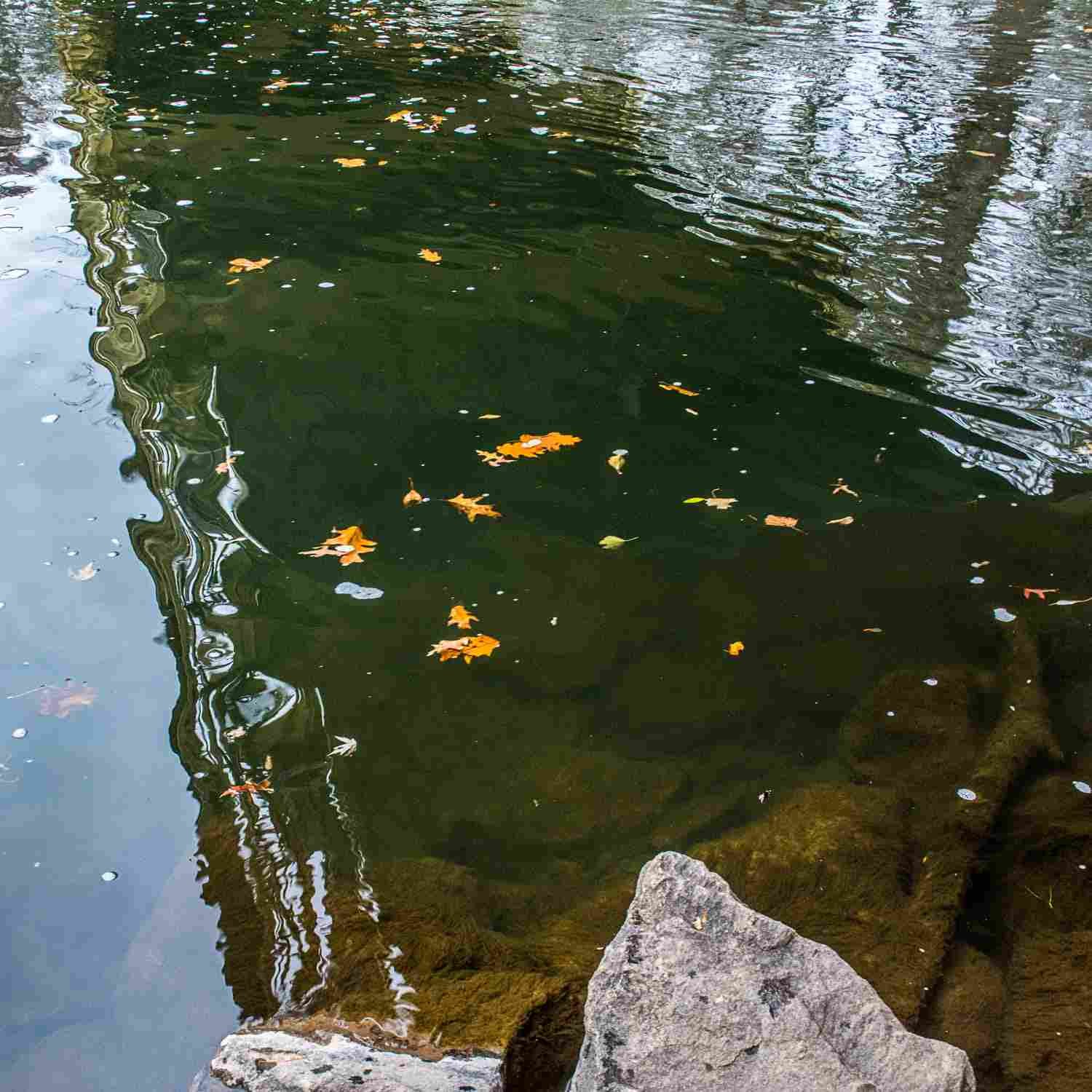
The water is deep and clear at a bridge that doesn’t get stocked. It doesn’t rule out some trout swimming upstream or down.
Spreading Out
When runoff does increase flow, trout spread out, a state of affairs disadvantageous to fishermen who don’t venture beyond stocking points, and a big relief for those who do. Some spots near stocking points remain good, however.
Almost every winter, I catch some at a certain bridge, but other spots where they get put in are altogether barren by December. On one late March or early April occasion, though, when the river was closed ahead of the spring stocking, I walked my black Lab Sadie on the Bedminster Hike and Bike Trail. I spotted an 18-inch rainbow near a stocking point just before the North Branch Raritan got stocked. The event sticks in mind because the particular spot is usually flushed clean by December.
Naturally, you might do some walking and wading in the cold. Neoprene is your salvation, but be careful with the boots. Waders with boots attached to them insulated by at least 600 grams of Thinsulate will keep your feet warm, but if you’re not careful while walking among rocks, you’ll tear those boots open.
It’s not as if they’re not functional and made to be. I’ve been using mine for six years, and nothing about them suggest they’re breaking open. They’re not Patagonia wading boots built for hiking, but they’re a lot warmer. The neoprene material of the waders themselves is perhaps the most comfortable clothing you’ll wear. Warm and very comfortable, they should serve you well. After owning a pair for six years, I can confidently say they last. They look and feel like new.
Ice over shallows. The spot to fish is where stronger current and water a foot deeper carries the food to trout. I caught a trout over 20 inches that day.
Where to Find Trout
In your travels, holes aren’t the only spots holding trout, and although holes do hold some, don’t overlook relatively shallow water. I know a hole at least eight feet deep that exists as part of a stretch mostly only a few feet deep. I normally don’t fish the hole itself as much as I fish water between four and six feet deep upstream of it. One of the trout I pulled from that shallower water weighed 5.3 pounds, caught in March. Other trout get caught, besides.
I wouldn’t suggest you overlook deep water, but in my own experience, most trout have come from shallows. One of the stocking points I know of is so shallow that trout abandon it altogether and seek better cover. I found some several hundred yards downstream in water only a foot deeper—thigh level.
Since surely those fish didn’t represent the remainder of all of them stocked, downstream about a quarter mile, a hole five feet deep at most is promising holding water. I haven’t done as well there, though.
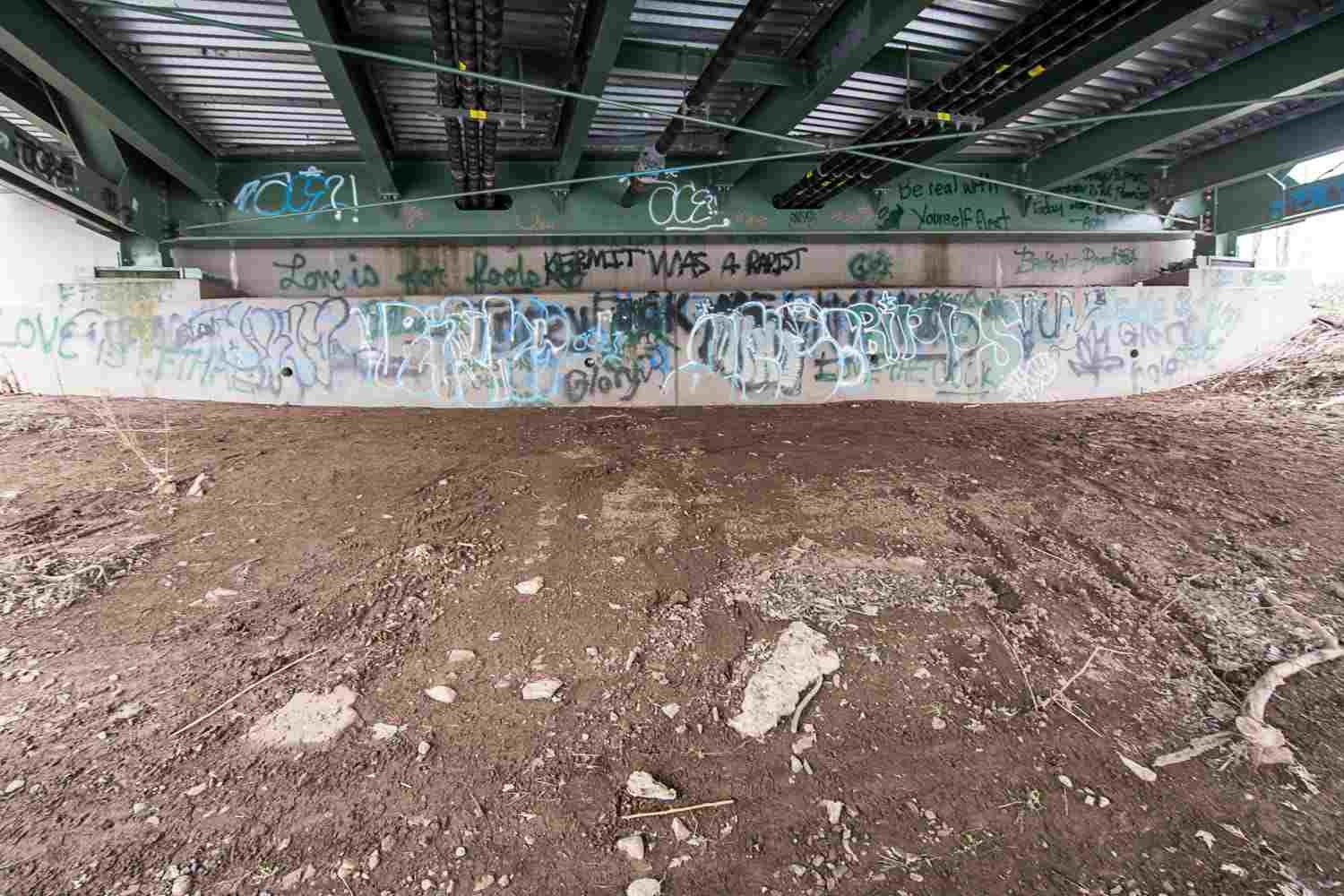
Underneath one of the bridges where trout get stocked.
Tackle and Technique
Flyfishing with a beadhead nymph under an indicator float or fished freely, a streamer pattern like the beadhead Wooly Bugger, an egg pattern: all of these options produce winter trout. So does an egg sack presented under a float managed by a centerpin rod and reel. I know of a hole, where the South Branch Raritan is a big river, that can only be accessed by either the use of a centerpin outfit or otherwise maneuvering a float into it, as you would, indeed, do most effectively with a centerpin outfit. (I don’t recommend winter access from canoe or kayak!)
In general, though, jigging is the more popular approach. Both the Haggerty and Kalin’s black marabou jigs prove very effective. The price of the Haggerty brand online is outrageous, though, and I buy Kalin’s from the Sporting Life in Whitehouse, New Jersey, on Highway 22. Both 1/16th and 1/8th ounce will work, but unless you want reach by casting or in getting the jig deep, stick with the smaller.
Four-pound test limp monofilament casts well in the cold. Berkley XL monofilament, for one example, definitely not the XT monofilament Berkley also offers. Most of the time, I use a four-and-a-half-foot St. Croix ultralight, but when using my five-foot Shimano, I do get a longer cast where I need it. I’ve compared. It’s maybe seven feet of difference, but that helps.
Years ago, when I first tried for trout in October and November, I fly fished exclusively, and when I switched to spinning gear and the jig, I felt the shame of doing the less romantic of the two options. I readily admit fly fishing is romantic, but being straightforward about fishing is another approach with a beauty all its own. Not every school of art is romantic, anyway. Invest intention in every cast you let loose, and you’ll find yourself putting that jig on a dime.
You won’t catch as many trout as you will during the springtime, but they’re bigger, averaging 14 to 16 inches and sometimes measuring two feet long. If you catch a single one on a winter day, you’ve done what you set out to do—catch fish.
The article originally appeared in New Jersey Federated Sportsmen’s News.